Fast, Reliable Fixes for Every Gutter Problem

Gutter Repair

Fast, reliable fixes for leaks, sagging, and storm damage across Westchester County.

Call anytime

Yonkers receives over 50 inches of rain annually, endures freeze-thaw cycles from November through March, and absorbs the full force of Atlantic nor'easters each winter. That combination of heavy rainfall, ice dam formation, and sustained wind-driven precipitation puts enormous stress on residential gutter systems, causing leaks, sagging, and joint failures that demand prompt professional repair before water damage reaches foundations and fascia boards.

Common Gutter Problems in the Yonkers Area

Gutter damage in Yonkers follows patterns shaped by the city's climate, geography, and housing stock. The combination of 50 inches of annual rainfall, 25-plus inches of seasonal snowfall, and the persistent humidity carried inland from the Hudson River creates a year-round assault on residential drainage systems. Each season introduces its own failure mechanisms, and homeowners who recognize these patterns early can address repairs before minor issues escalate into structural water damage.

Sagging gutters rank among the most visible problems across Yonkers neighborhoods. Heavy snow and ice loads during winter stretch and bend the hangers and brackets that secure gutters to fascia boards. In Park Hill and Crestwood, where mature tree canopy drops saturated leaf debris into channels throughout autumn, the added weight of wet organic material compounds the stress. Once a gutter section begins to pull away from the fascia, the pitch changes, water pools at the low point, and the sagging accelerates with each subsequent storm.
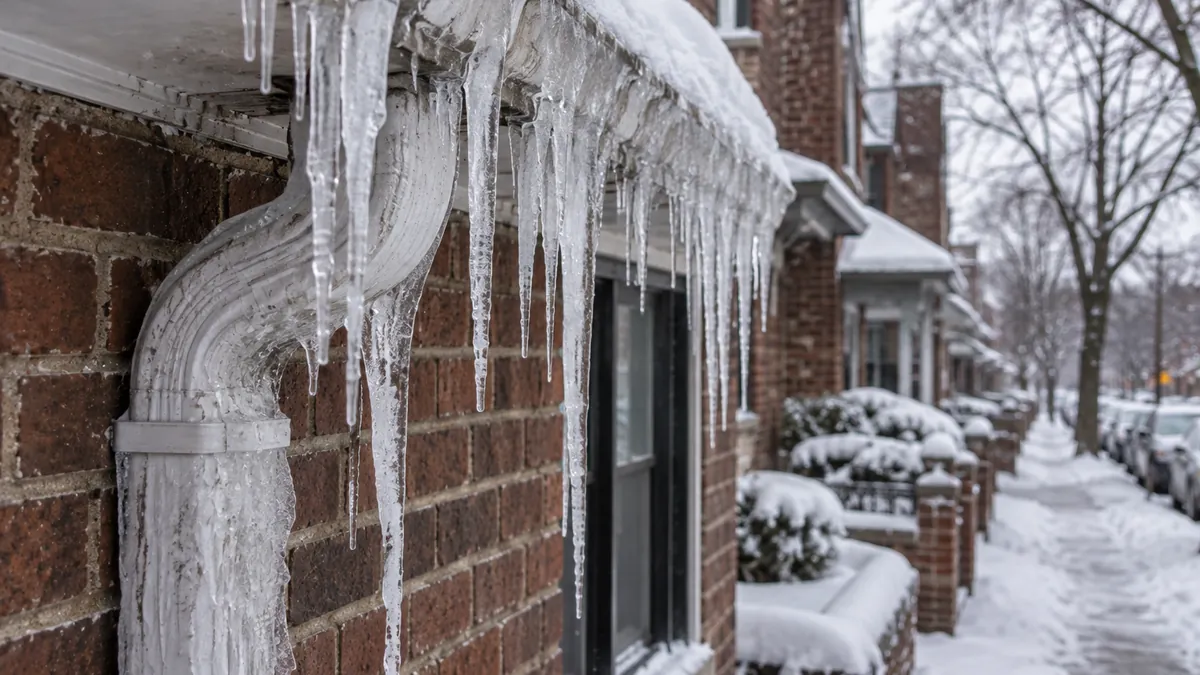
Frozen downspout showing ice damage common during Yonkers winters

Leaking joints and seams represent the second most common repair category. Sealant applied during original installation has a limited lifespan, typically 5 to 10 years depending on product quality and sun exposure. In the Yonkers climate, where freeze-thaw cycles can occur dozens of times between November and March, thermal expansion and contraction break down sealant bonds significantly faster than in more temperate regions. Sectional gutters joined every 10 feet are especially vulnerable, though even seamless systems develop leaks at corners, end caps, and downspout outlets.

Overflow during rainfall, even when gutters appear clean, often indicates improper pitch or undersized channels. Many older homes in Getty Square and Nepperhan were fitted with 4-inch gutters that cannot handle the volume produced by contemporary storm intensification patterns. Fascia and soffit rot follows closely behind overflow problems, as water trapped behind the gutter channel saturates the wooden fascia board. The humidity from Hudson River proximity slows drying between storms, creating ideal conditions for wood rot and mold growth that can spread to roof sheathing if left unaddressed.
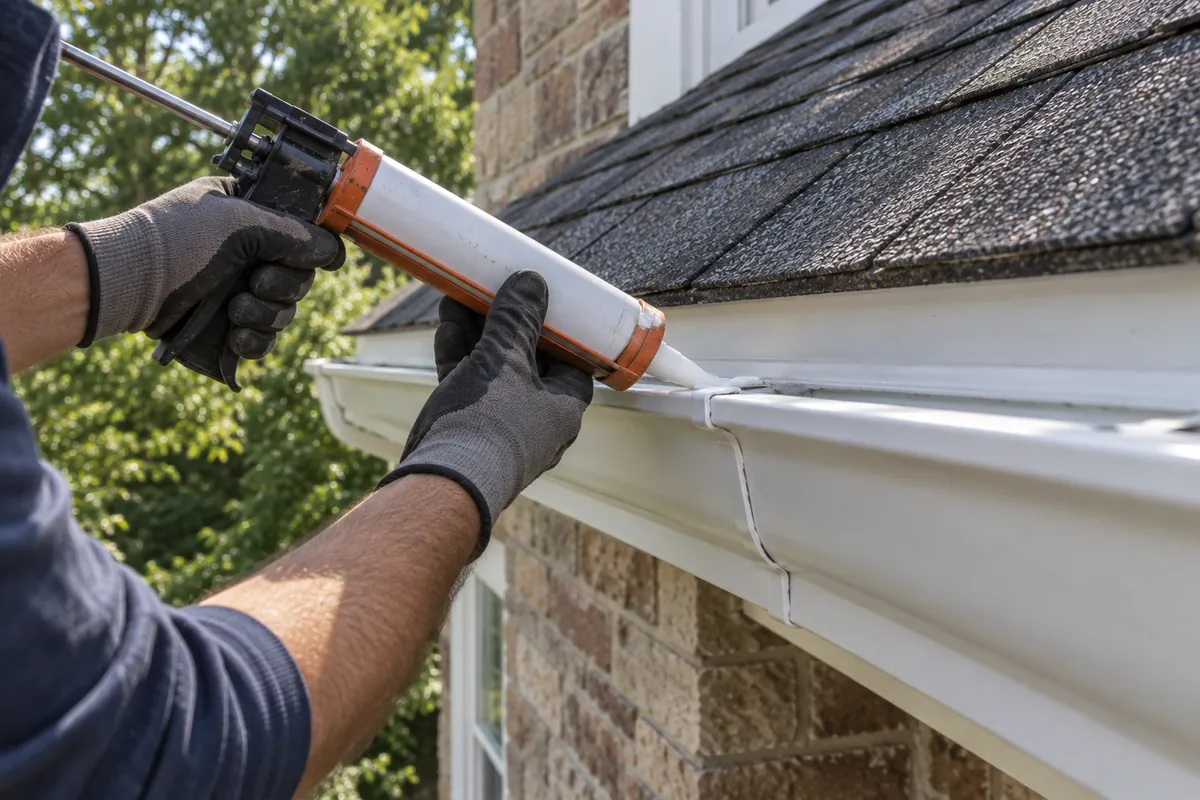
Technician performing hands-on gutter repair on a residential property

Ice Dam Risk in Yonkers

Pre-war homes in Park Hill, Crestwood, Nepperhan, and Getty Square face elevated ice dam risk due to older roof insulation, shallow eave angles, and original gutter systems. Ice dams form when heat escaping through the roof melts snow at the ridge, sending water downward to refreeze at the colder gutter line. The resulting ice wall forces meltwater under shingles and into the home. Professional ice dam removal using steam or controlled heat is the only safe approach. Homeowners should never chip or hammer ice from gutters, as this damages both the gutter material and the roofing beneath it.

Storm damage from nor'easters is an annual reality for Yonkers properties. Wind-driven debris, falling branches, and ice accumulation can dent, crack, or completely dislodge gutter sections in a single event. Roughly 35 percent of Yonkers homes were built before 1950, and many of these pre-war properties feature aging galvanized steel or early aluminum systems with original brackets that lack the holding strength of modern hidden hanger designs.

Neighborhood-Specific Patterns

Different Yonkers neighborhoods experience distinct gutter failure patterns based on their housing stock and tree coverage. Park Hill's stately Victorians and Colonial Revivals feature complex rooflines with multiple valleys and dormers that create concentrated water flow points. Crestwood's mid-century homes sit beneath dense hardwood canopy that produces heavy leaf loads from September through December. Nepperhan and Getty Square contain dense concentrations of multi-family and attached homes where shared gutter systems mean one neglected section can compromise drainage for an entire building row.

The city's 35 percent pre-1950 housing stock introduces specific failure patterns that modern homes rarely encounter. Original galvanized steel gutters develop pinhole perforations from decades of corrosion. Early aluminum systems installed as replacements in the 1960s and 1970s often used thinner gauge material and wider bracket spacing than current standards require. Wooden gutter troughs, still found on a handful of historic properties, demand specialized repair techniques that differ entirely from metal gutter work. Understanding which repair approach matches the specific gutter system and failure type is essential for lasting results.

Gutter Repair Pricing in Yonkers

Current repair pricing ranges based on Westchester County market data. Most single-issue residential repairs fall between $250 and $450. All estimates are free with no obligation.

Repair Type Price Range Notes
Leak / Joint Repair $75 – $175 Sealant application at seams, corners, and end caps
Rehanging / Sagging Fix $150 – $300 New hidden hangers at tighter intervals
Downspout Repair $75 – $200 Reconnection, rerouting, or elbow replacement
End Cap Replacement $50 – $125 Sealed replacement caps at gutter terminations
Seam Sealing $100 – $250 Full seam resealing on sectional gutter runs
Storm Damage Repair $200 – $600 Dent repair, section straightening, bracket replacement
Full Section Replacement $8 – $13/LF New seamless aluminum section with matching profile
Emergency / After-Hours Add $75 – $150 Surcharge on top of base repair cost

Pricing is approximate and varies by project scope, building height, material type, and extent of damage. Contact Yonkers Gutter Genius for a detailed, no-obligation estimate.

Have questions? Call anytime.

No obligation — free estimates available Monday through Saturday.

(914) 786-6569 Call For Free Estimate

Types of Gutter Damage

Six categories of gutter damage commonly found across Yonkers residential properties, each driven by the region's specific climate and housing conditions.

Sagging and Pulling Away

Heavy snow loads, saturated leaf debris, and aging brackets cause gutters to sag and separate from fascia boards. Yonkers averages 25-plus inches of annual snowfall, and the weight of ice accumulation during prolonged cold snaps pushes even properly installed hangers past their holding capacity over time.

💧

Joint and Seam Leaks

Sealant at gutter joints degrades under UV exposure and thermal cycling. In Yonkers, where dozens of freeze-thaw transitions occur each winter, sealant bonds fail faster than in milder climates. Sectional gutters joined every 10 feet are most vulnerable, but corners, end caps, and outlets develop leaks as well.

🌊

Overflow Despite Clean Gutters

Overflow during rainfall even when channels appear clear usually indicates improper pitch or undersized gutters. Many older Yonkers homes in Getty Square and Nepperhan still have 4-inch systems that cannot handle the volume produced by heavy spring and summer storms hitting 50 inches annually across the region.

🌳

Fascia and Soffit Rot

Water trapped behind gutter channels saturates wooden fascia boards, and the ambient humidity from Hudson River proximity slows drying between storms. Left unaddressed, rot spreads from fascia into soffit panels and roof sheathing. Park Hill and Crestwood homes with original wood trim are particularly susceptible.

Storm and Impact Damage

Nor'easters deliver wind-driven debris, falling branches, and sustained lateral pressure that can dent, crack, or dislodge gutter sections. Pre-war homes with original galvanized steel systems and wider bracket spacing suffer disproportionate storm damage compared to modern installations with hidden hanger systems.

Ice Dam Formation

Heat escaping through poorly insulated roofs melts snow at the ridge, sending water to refreeze at the colder gutter line. The resulting ice wall forces meltwater under shingles and into the home. Yonkers' pre-1950 housing stock with shallow eave angles and original insulation faces the highest ice dam risk.

The Repair Process

A structured six-step approach ensures every gutter repair addresses the root cause of damage, not just the visible symptom.

1

Visual Inspection

A comprehensive exterior inspection covers every linear foot of guttering, all downspout connections, fascia condition, and roof edge details. The inspection identifies both obvious damage and developing issues that could cause future failures if left unaddressed.

2

Diagnosis and Scope

Each identified issue receives a specific diagnosis: sealant failure, bracket fatigue, pitch deviation, material perforation, or structural compromise. The repair scope is documented with clear explanations of what needs to be fixed and why, along with a transparent cost estimate.

3

Cleaning and Prep

All debris, organic buildup, and old sealant are removed from the affected sections before any repair work begins. Clean surfaces ensure proper adhesion for sealant applications and accurate assessment of the underlying material condition throughout the repair zone.

4

Repair Execution

Repair methods are matched to the specific damage type: commercial-grade sealant for joint leaks, hidden hangers for sagging sections, patch plates for perforations, and section replacement for irreparable damage. Only materials compatible with the existing gutter system are used.

5

Flow Testing

After repair completion, water is run through the entire affected section to verify proper flow, confirm pitch accuracy, and ensure all sealed joints hold under volume. Downspout discharge is checked to confirm water exits at the correct location away from the foundation.

6

Documentation

A written summary of all completed repairs, materials used, and warranty information is provided along with recommendations for ongoing maintenance. Any developing issues observed during the inspection that do not require immediate repair are documented for future reference.

When to Repair vs. Replace

Understanding when a repair delivers lasting value and when full replacement makes more financial sense helps homeowners avoid both unnecessary spending and false economies.

Repair Makes Sense When

  • The gutter system is less than 15 years old with isolated damage
  • Sagging is limited to one or two sections caused by bracket failure
  • Leaks are confined to identifiable joints, seams, or end caps
  • Storm damage affects a single run without compromising adjacent sections
  • The gutter material remains structurally sound with no widespread corrosion
  • Projected repair cost stays well below 50 percent of replacement cost

Replacement Makes Sense When

  • The system is over 20 years old with multiple concurrent failure points
  • Galvanized steel gutters show widespread rust perforation throughout
  • Sagging extends across the majority of the home's gutter runs
  • Recurring leaks return within months of previous repair work
  • The existing system is undersized for the roof's drainage requirements
  • Cumulative repair costs over two years approach replacement pricing

The 50 percent threshold: when projected repair costs exceed half the price of a full replacement, investing in a new system delivers better long-term value. For most Yonkers homes, full aluminum gutter replacement runs $740 to $2,600 depending on linear footage and profile size.

Have questions? Call anytime.

No obligation — free estimates available Monday through Saturday.

(914) 786-6569 Call For Free Estimate

Frequently Asked Questions

Gutter repair costs in Westchester County vary by the type and extent of damage. Leak and joint repairs typically run $75 to $175, sagging gutter fixes range from $150 to $300, and storm damage repair can cost $200 to $600. Most single-issue residential repairs in Yonkers fall between $250 and $450. Full section replacement runs $8 to $13 per linear foot. Emergency and after-hours service adds $75 to $150 to the base repair cost.

Yes, sagging gutters can often be repaired without full replacement when the damage is isolated to specific sections. The most common fix involves installing new hidden hangers or fascia brackets at closer intervals, typically every 18 to 24 inches instead of the original 36-inch spacing. If the gutter material itself remains structurally sound with no cracks, holes, or extensive corrosion, rehanging is a cost-effective solution that typically runs $150 to $300.

Most residential gutter repairs in Yonkers are completed within 1 to 3 hours, depending on the scope of damage. A straightforward leak seal or end cap replacement may take under an hour. Rehanging a sagging section typically requires 1 to 2 hours. Storm damage repair involving multiple failure points or fascia work can extend to a half day. Emergency repairs are prioritized for same-day or next-day completion.

Gutter leaks develop from several causes common in the Yonkers climate. Joint and seam failures are the most frequent culprit, as sealant degrades over time from UV exposure and freeze-thaw cycling. Holes and perforations result from corrosion, particularly on older galvanized steel systems. Ice damage during winter can crack seams and push sections apart. Standing water from improper slope accelerates corrosion at low points. Loose or missing end caps allow water to escape at gutter terminations.

Ice dams should be removed by a professional using steam or controlled heat methods. Homeowners should never chip, hammer, or pry ice from gutters, as this almost always damages the gutter material, loosens hangers, and can crack or dislodge shingles. Professional ice dam removal typically costs $300 to $600 depending on severity and roof access. Prevention through proper attic insulation, ventilation, and gutter maintenance is far more cost-effective than repeated emergency removal.

Five warning signs indicate gutters need professional attention: visible sagging or sections pulling away from the fascia, water spilling over gutter edges during rain, staining or streaking on exterior walls below the gutter line, pooling water near the foundation after storms, and peeling paint or rot on fascia boards behind the gutters. Any of these symptoms warrants a professional inspection before minor issues escalate into structural water damage.

The repair-versus-replace decision depends on the age of the system, the extent of damage, and cumulative repair costs. Gutters less than 15 years old with isolated damage are almost always worth repairing. Systems older than 20 years with multiple failure points, widespread corrosion, or recurring leaks typically justify full replacement. A useful threshold: when projected repair costs exceed 50 percent of the replacement cost, replacement delivers better long-term value.

Schedule a Gutter Repair Estimate

Free inspections, transparent repair pricing, and professional gutter service across Yonkers and Westchester County. Call today to schedule an appointment.

Call For Free Estimate